Magic is the ability to tap into the elements around you, draw that power through you, and use it to affect the physical world. With magic, you can summon raw elemental energy and use it to strike your enemies, or use this energy to manipulate the world around you. Those who have this ability are called mages or casters.
Magic—and the ability to control it—comes from attributes attuned to water. In the Kingdom of Silverthorne, most people hate and fear mages because of the mysticism and power inherent to the magical arts. In general, mages are not allowed to hold positions of power and have a difficult time in political situations.
Commonly known spells are aligned with one of the four elements—Earth, Water, Air, or Fire. A mage may feel an affinity for one of these elements and concentrate on learning spells from that particular element. Someone interested in using spells to overwhelm or destroy opponents might pursue Fire for example.
There are rumors that more advanced magics are being developed beyond standardized understandings of the principle elements. Finding details on these may take getting to know the right people, or uncover the right notes hidden in various libraries and other repositories of knowledge.
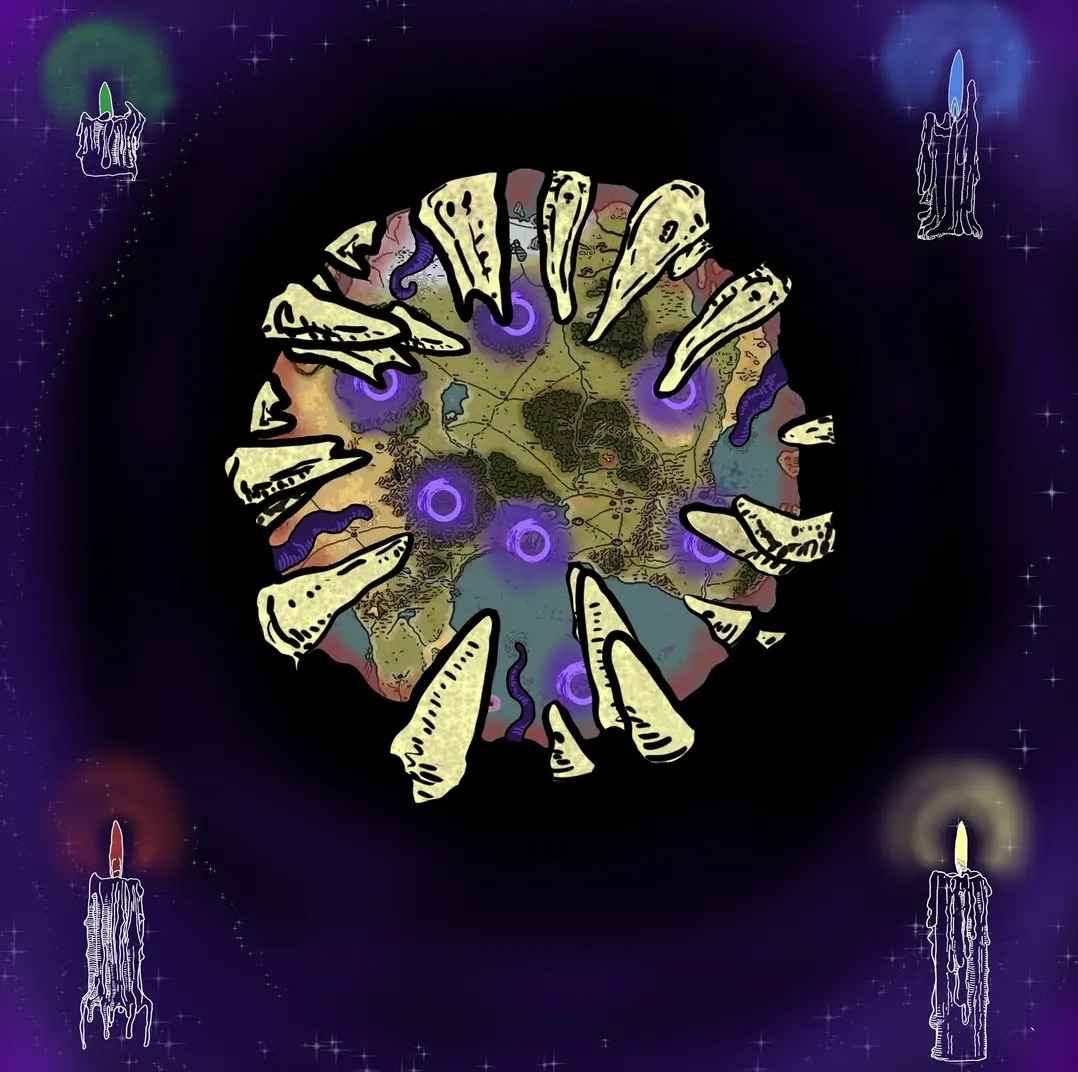
The Elements
The Element Air: (Opposes Earth) Air is the most chaotic of the elements and is volatile and unpredictable. Air may signify change, chaos, freedom, alteration, sustaining force, quickness, or simply wind. Air is a high damage element focused on single target attacks.
The Element Earth: (Opposes Air) Earth represents a base; it is the foundation for all living things. Earth is associated with life, order, living beings, toughness, but also the inanimate.
The Element Fire: (Opposes Water) Fire is dynamic and destructive, as well as strong and difficult to control. Fire can be death, destruction, cleansing, consumption, rage, strength, or simply heat. Fire is a high damage element that is focused on multi-person attacks
The Element Water: (Opposes Fire) The nature of Water is to control and
purify. Water also represents enhancement, nurturing, or mental prowess.
Types of Spells
There are various types of spells, which are defined to clarify what abilities can augment them. For example, some abilities can only modify Offensive Spells, or Defensive Spells, or Buff Spells.
- Offensive – A broad term that means any Damaging or Crowd Control Spell, with the exception of Charms (these are not always considered Offensive), or any other than causes some sort of harmful or constricting effect to a target.
- Damaging – Spells that deal numbered damage, or a damaging absolute effect.
- Defensive – Spells that provide a Resist, Evade, or otherwise grant additional soak (such as Armor Points) or damage reduction.
- Buff – Spells that occupy Buff Slots and provide a specific, single use or long-lasting benefit. If the spell provides a single use, it occupies a Buff Slot until used.
- Debuff – Spells that inflict various debuffs that are not Crowd Control effects.
- Curative – Spells that heal or remove ailments.
- Communication – Spells that send messages, open communication channels, or somehow enhance an individual’s ability to communicate with or understand others.
- Crowd Control – Spells that inhibit movement or control, such as various movement impairs (pin, bind, web, confine) or fear, sleep, etc.
- Conjuration – Spells that conjure elementals or objects, typically to perform a specific task.
- Alteration – Spells that alter appearance or somehow change the physics of something.
- Shapeshifting – Spells that physically change an individual. By default, Shapeshifting spells only work on willing targets.
- Circle – Spells that require a Circle Phys-Rep (max 10 foot diameter) to be placed on the ground, and cause a specific effect any time something passes into it.
- Wall – Spells that require a Wall Phys-Rep (max 10 feet long) to be placed on the ground, and cause a specific effect any time something passes through it.
- Weapon Rune – Spells that imbue a weapon (and in some cases, a shield) with an enchantment that typically modifies the damage dealt. By default, weapons can hold a single Weapon Rune at a time, and they occupy a unique Rune Slot (see Weapon Runes under Concepts & Terms for more details.
Requirements to Cast
In order to cast a spell, you must have a Spell Copy in your spell book (see Learning Spells below), you must have Read Magic, and you must have the appropriate level of a Magic Skill to cast a particular spell. Then, you must perform an incantation (incant) and call out the resulting spell effect. After you say an incant, you must release the spell within 3 seconds, or it fizzles out. Incantations follow a similar pattern based on their element:
By the quickness of air I cast…
By the might of earth I cast…
By the rage of fire I cast…
By the flow of water I cast…
By the cycle of death I cast…
By the cycle of life I cast…
By the _ of dream I cast…
Examples: “By the quickness of air, I cast Spell, Grant Freedom,” or “By the rage of fire I cast Spell, Lash 100 Fire.”
Mana Cost: 2 Mana per tier of the spell
Minimum Mana Cost: 1 Mana per tier of the spell (50% minimum)
Learning Spells
To be a mage, you must have a Spell Book, which is inherently permanently attuned to you. Your Spell Book represents your connection to, and learning of, various magics. Spell Books contain Spell Copies, which provide write ups and details of spells, and are considered Recipes, and are learned similar to any other Proficiency.
You are able to teach and learn new spells both at-game by role-playing, and as a Downtime Action.
In order to learn a spell, you must have a teacher, and you must have the appropriate Magic Skill at a level equal to or greater than the tier of the spell (e.g., to learn a tier 3 air spell, you must have at least level 3 Air Magic). You must also meet any other special requirements needed to learn the spell, such as being Marked by an element for Life, Death, or Dream Magic.
When you learn a new spell, and add it to your Spell Book, you should also add it to your list of known spells on your character sheet.
Each event, and as a Downtime Action, you can learn a total number of spell tiers in any individual magic skill equal to your level of that magic skill. Learning a new spell at game requires a minimum of 10 minutes of role-playing with a teacher, at which point a Spell Copy of the spell may be added to your spell book. This is typically done by alerting Logistics between games to receive an official copy.